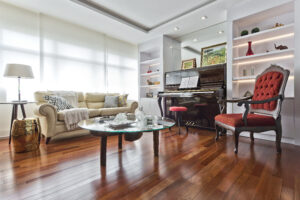
European white oak and North American oak, hickory and maple have traditionally accounted for the bulk of hardwood flooring consumption here in the U.S., as consumers demonstrate their affinity for species that are not only visually appealing but also present well in long-and-wide-plank formats. Moreover, retailers, distributors, consumers and commercial end users have long enjoyed relatively easy access to these species simply due to their abundance.
At the same time, however, there has been a continued (albeit niche) interest in exotic wood floors. These include imported tropical species from South America as well as some unique, unconventional wood materials gleaned from forests in Asia and even Africa. While overall demand for many of these species has diminished over the past 20-25 years, a market still exists for these products. And along with that profit opportunities for specialty retailers and distributors.
“We are seeing far less demand for South American exotics compared to 20 years ago—the period that marked the height of the category,” said Jason Elbert, vice president, North American sales and marketing, Indusparquet USA. “Twenty years ago, all our distributors were on container order limits, and retailers were installing six or seven out of 10 hardwood jobs with some form of an exotic species—most commonly Brazilian cherry (Jatoba). With that said, exotics are still a very viable product category with a strong following.”
While Elbert said that same mainstream popularity for exotics might never return to the level it once occupied, he’s not counting out the category by any means. “There seems to be a resurgence back to warmer tones and unique species with hardwood buyers, which positions South American exotics well for a rebound in the marketplace,” he explained.
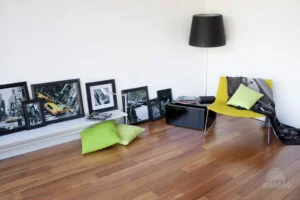
Indusparquet, which stands among the most prominent suppliers of exotic wood flooring, currently offers 10 different species, all indigenous to South America. “Historically, Brazilian cherry has been the best-selling species in the United States, and that is still our underlying sales trend,” Elbert said. “In fact, Brazilian cherry accounted for approximately 25% of our overall sales in the U.S. last year. Other very popular species options include: Tigerwood (Muiracatiara), Brazilian chestnut (Sucupira) and Amendoim.”
Other specialty suppliers of imported hardwood species also feel there’s still a viable market for exotics despite the dramatic shift in tastes among U.S. consumers. “The demand for exotic hardwood flooring remains relevant in the U.S. market, although it has evolved considerably over the last two decades,” said Pedro Tavares, president, Ribadao Wood Boutique. “Fifteen to 20 years ago, exotic species experienced widespread popularity as homeowners sought out dramatic colors, distinctive grain patterns and highly durable flooring options. Species such as Brazilian cherry, Tigerwood, Santos mahogany and cumaru (Brazilian teak) became synonymous with luxury and exclusivity. Today, the market is largely driven by design trends favoring European and white oak, particularly in wider planks, lighter tones and more natural finishes.”
This overall shift in demand, exotic suppliers argue, has not diminished the value of exotic species. Instead, exotics have become a more specialized and curated segment of the premium flooring market.
Rather than appeal to the mass market, exotic hardwoods now attract homeowners, designers and architects seeking uniqueness, authenticity, exceptional durability and a visual identity that cannot be replicated by traditional domestic species, Tavares explained. “In many respects, exotic flooring has transitioned from a trend-driven product category to a true luxury niche.”
Beyond their visual appeal, many imported tropical wood species possess attributes that make them extremely durable—a requirement for both high-traffic residential and commercial installations alike.
“South American woods are among the most dense species in the world,” Indusparquet’s Elbert said, citing chart-topping hardness numbers on the Janka scale. “These products are going to last a very long time and will require very little sanding and refinishing over their lifespan. In fact, many consumers purchase exotic wood floors on the basis of their unique colorations, so they are not likely to sand them and reapply a different stain.”
Then there’s the storytelling aspect behind many imported tropical wood species. They are often sourced from (pardon the pun) truly “exotic” locales around the world. “Many exotic species carry a strong sense of origin, heritage and rarity,” Ribadao’s Tavares said. “For luxury residential and hospitality projects, this narrative can be just as important as the physical characteristics of the floor itself.”
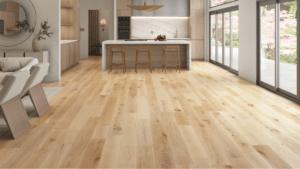
These unique traits extend beyond sources close to the equator. Take, for example, a fairly new collection from AHF Products’ LM Flooring brand that showcases Japanese white oak. Historically prized for aging some of the world’s finest whiskey, the species is reimagined in a line called Mizunara Woods. Sourced from the Hokkaido region at elevations of 3,000 to 5,000 feet, the wood develops a distinctive, tight grain pattern achieved through decades of slow growth in Japan’s nutrient-rich volcanic soil.
“It’s naturally light, consistent coloration requires only minimal tinting to achieve beautiful designer-inspired tones, allowing the intricate grain patterns to remain the star of the show,” said Kevin Whaley, vice president of sales and product, LM Flooring. “Blending rare natural beauty with durable engineered construction, Mizunara Woods delivers a refined, high-performance floor designed to elevate every room while standing up to the demands of everyday life.”
A more familiar exotic species sourced from Asia is Acacia. The product is known for its high density, stunning natural “swirling” grain pattern and, surprisingly, a natural resistance to moisture and wear. What’s more, the product’s inherently tight grain structure and natural oil content make it resistant to rotting, decay and insect damage. In terms of visuals, Acacia boasts a dynamic color palette that transitions from warm honey-gold tones to deep reddish browns. Several domestic suppliers offer the species in select products.
Regardless of the locale, importers of exotic wood species are confident there will always be a market for the category. “In a market increasingly dominated by similar white oak visuals, exotic species continue to offer designers and homeowners an opportunity to create truly distinctive spaces,” Tavares said.
Call to action: USTR seeks industry feedback on proposed tariffs on exotics
Consumers, retailers, distributors and end users who opt for exotic wood floors over traditional domestic species have always had that option at their disposal. But if a proposed 25% U.S. tariff on imported exotic species takes effect, it could dramatically elevate the cost of some South American wood species to the point where it could significantly curtail imports to the U.S.
Last year a punitive 50% tariff was applied to Brazilian hardwood flooring imports. After the Supreme Court ruled this was illegal, the tariff was reduced to 10%. Now, the U.S. government is proposing another 25% (or greater) tariff increase as part of an ongoing “Section 301” investigation by the United States Trade Representative (USTR). These tariffs would likely go into effect by August if enacted.
That’s why hardwood flooring importers say it’s vitally important that each segment of the supply chain provide feedback by June 30, 2026, to help prevent these tariffs and the corresponding downstream economic harm they would undoubtedly cause.
“In my opinion, the main argument for exotic hardwood to be exempt from future tariffs is due to these species being naturally unavailable here,” said Jason Elbert, vice president of sales and marketing, Indusparquet USA. “They cannot be commercially grown or produced here in the United States, so the tariffs are not supporting U.S. manufacturers as a byproduct. Furthermore, due to the sensitive nature of wood flooring, these products must be aged, acclimated and manufactured in the same environment where the wood was harvested to ensure reliable and consistent flooring quality.”
The U.S. often grants tariff exemptions for imported natural products that cannot be locally grown or produced domestically. To that end, USTR invites interested parties to submit comments on open public dockets to better evaluate trade issues that will negatively affect American businesses and consumers.
Indusparquet and its partners across the supply chain are encouraging the industry to provide support by submitting comments on the USTR comments portal at ustr.gov.
The “comment period” remains open until the end of June.
Note: When providing comments, please be sure to reference the following codes: 4409.22.0560 (solid) and 4412.31.5225 (engineered).
The post Wood: There’s still room for exotics in a sea of oak appeared first on Floor Covering News.
Wood: There’s still room for exotics in a sea of oak Posted First on https://fcnews.net

No comments:
Post a Comment