Showing posts with label flooring phoenix. Show all posts

Friday, July 31, 2026

NFM, Shaw celebrate Dallas store grand reopening

The Nebraska Furniture Mart store in The Colony, Texas, spans 1.8 million square feet, including a 1.3 million-square-foot warehouse and distribution center and 560,000 square feet of retail space.

The Colony, Texas—Top executives from Nebraska Furniture Mart (NFM) and Shaw Industries gathered here this week to celebrate the grand reopening of its 1.8 million-square-foot mega-store in this suburb of Dallas. Originally opened in 2015, the grand reopening features enhancements throughout the sprawling 560,000-square foot showroom. A key highlight being the unveiling of the third Shaw Anso Gallery, the curated retail flooring concept from Shaw Floors.

“It was kind of shocking to realize that it was just four years ago we opened our very first Anso Gallery in Omaha, Neb.,” David Chambers, director of flooring, NFM, said in his opening remarks to attendees. “We saw an opportunity to create something different. We wanted to create a distinct destination where a consumer shopping for carpet could find an area that was more inspiring and easier to shop and navigate and, more importantly, had products and features that resonated with the consumer today. The response from our consumers exceeded our expectations in Omaha, which allowed us to then take the concept to our Kansas City market. Now we’re bringing the next generation of the Anso Gallery to our customers here in Dallas-Fort Worth.”

The 3,500-square-foot Anso Gallery—the standard footprint for the galleries in Omaha and Kansas City—is much more than an assemblance of Shaw’s top-selling carpet brands, according to Chambers. “As you walk the showroom today, you’ll see more than just carpet fixtures; you’ll see a thoughtfully designed shopping experience where consumers can visualize, compare and really shop with confidence about carpet,” he said.
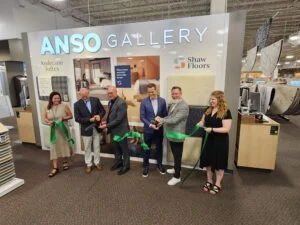
Like the two prior Anso Gallery locations, this latest installation represents the culmination of collaboration and partnership between NFM and Shaw Industries—companies that share a common connection with Berkshire Hathaway, the parent company. That was a key point of emphasis by Benjamin Liebert, president, Shaw residential, in his remarks to attendees.

“Thank you, David, for your partnership, and thank you for pushing us to be better,” Liebert said. “We really appreciate where we’re going. I think this is a great product of that.”

Liebert also acknowledged Tony Boldt, NFM president and CEO, as well as scores of NFM managers and associates. “Thank you, Tony, for your leadership and your trust, and to the entire NFM team for your trust in our brands. Thank you for allowing us to really invade and take over your showroom with these great products and brands. We’re very excited about the opportunity to work with you.”

Liebert also took the opportunity to recognize Shaw team members. “Thanks to our Shaw leaders, whether that be in sales or in marketing. And most importantly, our VPs and our territory managers who make it happen every day—the ‘last three feet’—and support the NFM team here. Thanks for being here and thanks for all your support.”

More importantly, Liebert stressed the importance of the true meaning of partnership. “To have a great partnership, you have to truly understand one another,” he said. “That means we have to understand NFM’s strategy and what they’re trying to bring to life with their customers. Similarly, they have to understand where we see the business going and where we would like to be. The best partners debate that, they challenge that. I think Dave and his team do a great job of really challenging us to be better every day. That’s the first tenant of a great partnership.”

Lessons learned

The Colony Anso Gallery is not just a carbon copy of the existing Shaw showrooms within NFM. Rather, it incorporates enhancements based in lessons learned from the previous locations.

“With each Anso gallery we have opened, we have had the opportunity to learn, improve and refine the experience,” Boldt stated. “From Omaha to Kansas City, and now here in The Colony, we continue to enhance the fixtures, layout and overall presentation to make this space even better for our customers.”

Part of that entailed tweaking the overall product mix since the first Anso Gallery showroom was unveiled. “We went pretty heavy with Pet Perfect in Omaha, but since then we’ve balanced Anso and Pet Perfect—that was a good learning lesson,” Chambers said. “We’ve also learned how consumers want to see how stairs are going to look with products. Another lesson we’ve learned is patterns have to be displayed in larger samples. The trick is showcasing these large samples without having these tall walls blocking sightlines throughout the department. That led us to create our Luxe display.”
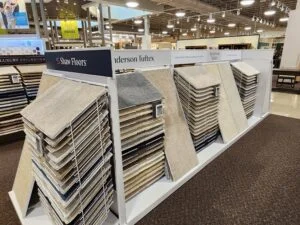
But perhaps the biggest lesson learned, according to Carolyn Haicl, senior vice president, marketing and brands, Shaw, was that you don’t have to inundate the customer with product to seal the deal. “We learned how to offer fewer SKUs  so it’s not so overwhelming to the customer,” she said. “It’s about displaying the products that matter, finding that right balance and helping RSAs walk customers through the benefits. It’s just an easier process and hopefully easier for the consumer to make a decision.”

(Look for more on this story in an upcoming edition of FCNews.)


The post NFM, Shaw celebrate Dallas store grand reopening appeared first on Floor Covering News.


NFM, Shaw celebrate Dallas store grand reopening Posted First on https://fcnews.net

Thursday, July 30, 2026

Retailers React: How are things fairing in your market?

mottoEvery two weeks, FCNews seeks out flooring retailers across the country to offer their advice on hot topics of the day. How are things fairing in your market?

Here are their responses:

“Our market continues to allow us to be aggressive with marketing strategy and gain share. Our forecast for 2026 is 5% growth in revenue over last year. Currently, at the halfway point, we are up 11%. We have spent 2.5% more on marketing year to date. We are pushing for more networking, Google reviews, referral and repeat customers and vendor leverage.”

—Mitchell Parton

Frazier’s Carpet One Floor & Home

Knoxville, Tenn.

“Both the retail and contract sectors are on track with our budget numbers. I am hopeful that the third and fourth quarters will surpass the budget. We have spent the better part of this year focusing on training our flooring consultants and design professionals to make us the best in the business.”

—Kevin Rose

Carpetland USA

Rockford, Ill.

“Our market is OK. Main Street commercial, remodel and some new homes are keeping a steady pace. We are clipping along at about the same pace as last year. The past oil boom and pandemic years taught us to handle more customers than we are currently dealing with now, so it feels slower.”

Jon Dauenhauer

Carpet World

Bismarck, N.D.

“There are so many positive indicators in the economy that we feel will translate into greater flooring sales in the second half of the year and continuing into 2027.”

—Sam O’Krent

O’Krent Flooring

San Antonio

“Our market has been steady. We have experienced nice growth through the first six months of this year; however, July has started off a little slow. Regarding what is selling, we still are experiencing high interest in flatweaves and some of the fashionable designs we see in the Prestige and Bellbridge lines. We are also witnessing a resurgence of stair rods, which we haven’t seen in quite a few years.”

—Tom Connell

M&M Carpet Showroom

Houston

The post Retailers React: How are things fairing in your market? appeared first on Floor Covering News.


Retailers React: How are things fairing in your market? Posted First on https://fcnews.net

Wednesday, July 29, 2026

Artificial turf finds its footing in residential spaces

turf
Products like Ecore’s premium turf surfaces remains in-demand for putting greens and athletic fields.

Artificial turf is no longer reserved for putting greens and athletic fields. What was once considered a niche product has become an increasingly viable landscape solution, driven by changing consumer lifestyles, water conservation efforts and advances in turf technology that have dramatically improved its appearance and performance.

“The category has evolved from a niche application, primarily associated with sports and specialty uses, into a mainstream residential solution,” said Josh Martenn, vice president of commercial sales at Ecore. “Turf has demonstrated strong staying power and is no longer viewed as a short-term trend.”

Expanding into residential

Over the last several years, turf has steadily made its way into residential applications as homeowners rethink what they want from their outdoor spaces. Today, homeowners are viewing turf as another outdoor surface option—one that eliminates much of the maintenance associated with a traditional lawn.

“Residential turf has experienced remarkable growth across the U.S. as homeowners increasingly seek beautiful, low-maintenance outdoor spaces that conserve water and remain attractive year-round,” said Neeraj Shah, vice president – product national, MSI. “Factors such as drought concerns, water restrictions, rising maintenance costs and a greater emphasis on outdoor living have all contributed to this trend.”

Suppliers agree the product’s low maintenance is helping fuel its popularity. “It’s consistent in any kind of climate, any kind of weather, any kind of shade conditions,” David Gross, executive director, INSTALL, told FCNews. “When you’re talking about residential areas, you have very sunny parts of the yard, very shady parts of the yard, and it’s pretty tricky to get consistent grass across that. Synthetic turf doesn’t have that problem. You can cut down on the maintenance demand by having synthetic turf. There are a lot of angles that are contributing to why synthetic turf is growing.”

Product design, too, continues to advance and influence homeowner decisions. “Over the last few years, turf has improved in terms of color, texture and overall realism, which has helped change perceptions and driven interest in turf,” said Travis Cramer, vice president and general manager, Tarkett Home. “For families who love to spend time outdoors, pets that love to run around and anyone who wants a beautiful lawn without the upkeep, turf is a great option. We see homeowners looking for outdoor solutions that are easy to maintain, attractive and practical. Turf checks all of these boxes.”

New markets

Drought-prone states remain among the category’s strongest markets, but suppliers agree residential turf is no longer confined to one region of the country.

“Residential turf continues to have appeal in the West and Southwest, where drought and heat are major considerations, but we are starting to see adoption across the United States,” Cramer explained.

MSI’s Shah noted that demand is expanding throughout the Sun Belt, Florida and rapidly growing suburban communities nationwide, where homeowners value low-maintenance landscapes that remain beautiful throughout the year.

Ecore’s Martenn added that demand is increasingly driven by lifestyle factors—busy households, pet owners and second-home owners—rather than geography alone.

The future of turf

turf
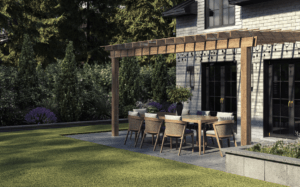
Turf products like Tarkett Home’s GreenSpace Natural are growing in demand across residential markets.

Manufacturers say they expect residential turf to continue evolving as both product innovation and consumer expectations advance.

For MSI, that evolution is closely tied to the continued growth of outdoor living and sustainable landscape design. According to Shah, homeowners and designers are increasingly looking for complete outdoor solutions that combine attractive, low-maintenance materials with lasting performance. “Turf will continue to play an important role alongside products such as porcelain pavers, natural stone and outdoor wall systems to create multifunctional spaces that are beautiful, durable and easy to maintain,” he said. “Continued innovation will also drive improvements in realism, comfort, drainage and overall performance.”

As homeowners continue to view their outdoor spaces as extensions of the home, manufacturers expect demand to follow suit. “Homeowners now think of their yard as an extension of their home, and are using the space to relax, play and entertain,” Tarkett Home’s Cramer said. “Turf makes it easier to create an outdoor space that is always ready to enjoy without having to spend the time on lawn maintenance.”

Alongside evolving lifestyles, sustainability is expected to play an even larger role in the category’s future. “The next phase of the category will be shaped by continued advancements in sustainability and performance,” Martenn said. “There is increasing focus on infill materials, PFAS-free systems, recyclability and improved drainage. Manufacturers that address these priorities will differentiate themselves in the market.”

Finally, to reap the benefits of increasing demand across markets, experts agree it’s also important to focus on supporting the labor market. “There is a bonafide shortage of skilled tradespeople and that includes landscapers,” Gross explained.

Chuck McClurg, president of Shaw Turf, said that capturing that growth will require a model designed around how the landscape professional operates and what they need to succeed.

“Landscape professionals continue to drive the landscape market, influencing the bulk of product decisions. As a result, the brand is focusing on what installers and contractors need most: speed, simplicity, local availability, residential delivery and consistent support.”

The post Artificial turf finds its footing in residential spaces appeared first on Floor Covering News.


Artificial turf finds its footing in residential spaces Posted First on https://fcnews.net

Tuesday, July 28, 2026

Tuesday Tips: Let it go

Dalton—The World Floor Covering Association (WFCA) released a new “Tuesday Tips” this week. In the series, WFCA experts present short video tips for improving customer service and optimizing staff performance. In the end, it’s all about understanding the importance of doing 100 things just 1% better than your competition.

In this week’s Tuesday Tips, Tom Jennings, retail training expert, explains why constantly correcting customers rarely changes their minds. In some situations, the better approach is to simply let it go.

The post Tuesday Tips: Let it go appeared first on Floor Covering News.


Tuesday Tips: Let it go Posted First on https://fcnews.net

Monday, July 27, 2026

Quartz PC—not your me-too rigid core floor

Quartz
Quartz PC exceeds 7,000 rotations on the Taber test, making it suitable for high-traffic installations.

Maintaining a competitive position in the crowded rigid core arena requires more than just meeting or exceeding stringent quality standards—those are table stakes. Lasting success in this product segment comes with providing a product that truly stands apart from the pack.

Sawyer and Southern, marketers of the Quartz PC line of rigid core flooring, said its offerings excel in each of those aspects. Initially created nearly six years ago but gaining traction due to recent enhancements, Quartz PC is billed as the antidote to poor-quality SPC.

As the name implies, Quartz PC uses a mineral-infused surface that creates a natural matte appearance similar to what you might see in real European oak wood flooring. The difference is this product is more scratch resistant than most wood floors, the company stated. Ironically, according to Chris Dillon, president of Sawyer and Southern, Quartz PC was invented by a wood enthusiast who had a disdain for the look of plastic floors.

The differences don’t stop there. Whereas traditional vinyl utilizes a plastic wear layer that can sometimes create a glossy surface reflection—a characteristic that some designers deem undesirable—with Quartz PC there is a lot more control when it comes to sheen levels of the floor, according to Dillon. It is also fireproof and naturally waterproof. Moreover, the product will not yellow over time, according to the company.

“What makes Quartz PC so special is there’s no vinyl wear layer on top—zero,” Dillon said. “Instead, we put a quartz coating on top of the film and then ceramic bead on top of that, which offers more quartz protection. The end result is a product with a 6% matte finish, so it truly does look more like a true hardwood floor. With the sheen on most vinyl products—whether that’s sunlight or artificial light—you can tell that it’s a vinyl product. With our product, you cannot.”

Quartz PC also maintains an edge over traditional vinyl products when it comes to performance, Dillon noted. He cited independent testing that shows the expansion rate of Quartz PC is 0.08%—that’s closer to tile than your standard SPC, which starts at half a percent and goes up from there. That means extremely low dimensional movement. Moreover, the product boasts a Class 34 commercial performance classification—all independently verified by Intertek Labs.

“We’re actually closer to porcelain than vinyl,” Dillon said. “The product is fireproof, waterproof, and the scratch protection is the best in the industry. It even outperforms vinyl products with a 30-mil wear layer. More importantly, we haven’t had any claims.”

The product’s construction is equally impressive, according to Dillon, who categorizes it as an SPC/quartz hybrid. While it’s not the industry’s first attempt at combining the two materials for flooring applications, he did say it’s the most successful endeavor in that regard. In fact, Dillon noted, the technology is protected by proprietary intellectual property developed specifically for Quartz PC.

“Our product was created after years of frustration with rigid core flooring that looked increasingly artificial while still generating claims from expansion, wear and surface damage,” Dillon stated. “We kept hearing the complaints so we did something about it.”

Specifically, he cited shortcomings of some existing resilient products as well as previous iterations of quartz-based floors that didn’t live up to expectations. “Where others have failed coming out with a quartz-based product is they ignored the core,” Dillon explained. “It’s one thing to have the best finish in the industry, but if your core is unstable and can’t handle it, the product is no good. If your click joint is going to break, the product is no good—no matter how strong the quartz is on top. It took several years for us to figure this out.”

Tried and true

Quartz
Quartz PC is currently available in nearly 20 trendy colors, with more introductions planned for the coming year.

Quartz PC has been utilized successfully in a variety of high-traffic applications ranging from malls and universities to multifamily uses—all with zero claims, according to Dillon. But don’t just take the company’s word at it; customers who carry the product also sing its praises.

“After six years of selling it, I can confidently say that Quartz PC delivers an exceptional combination of performance, durability, appearance and value,” said Ron Persley, owner of End Of The Roll Flooring Centres Kelowna, British Columbia, Canada. “The core is exceptionally stable, dimensionally, and highly resistant to dents, outperforming traditional WPC and SPC products. The wear surface is equally impressive—offering outstanding durability while avoiding the artificial, plastic appearance found in many rigid flooring options. It has earned its place as one of the best rigid flooring options available today.”

Top-selling Quartz PC collections in Persley’s store include London, Milano and Calais, along with several regionally selected décors that have resonated strongly with its customers. “It has been one of the easiest flooring products for us to sell.”

Persley is not alone in his assessments of Quartz PC. Fernando Soler, interior designer and sales consultant at Main Street Kitchen and Bath, Sarasota, Fla., is similarly impressed. “Helping clients select materials that are beautiful, durable and easy to install is very important, and I have found all of those features with Sawyer & Southern’s Aride & Urbano Flooring Collections. Renowned for perfectly emulating the warmth and texture of natural wood, these collections offer the extreme durability required for modern, high-traffic homes. I am a big fan of the product.”

Beyond the proven performance attributes and visual appeal, Quartz PC also provides retailers and distributors with higher profit-margin opportunities compared to typical SPC floors and derivatives of SPC. With a manufacturer suggested retail price of $5.49-$5.99 per square foot, it’s attractive enough to dealers looking for alternatives to competing hard surfaces while still being accessible to mainstream consumers.

“Given the durability along with the added UV finish, the flooring is an excellent choice when compared to luxury vinyl or engineered wood,” Soler added. “Being able to provide this material allows us to increase the overall sale when designing a full room.”

Quartz PC is currently manufactured in Vietnam, but more than 20,000 square feet of each color offered in the line is available at the company’s primary distribution facility in Tampa, Fla. An additional warehouse facility located in Austin, Texas, is also now up and running and stocking Quartz PC.

The post Quartz PC—not your me-too rigid core floor appeared first on Floor Covering News.


Quartz PC—not your me-too rigid core floor Posted First on https://fcnews.net

Friday, July 24, 2026

Latest adhesive innovations solve common problems

A flooring installation is only as successful as the condition of the job site. Sounds pretty straight-forward, right? Except installers today can encounter a number of issues—from delays caused by other trades still working in the area, to elevated moisture to the HVAC system not working properly.

adhesive

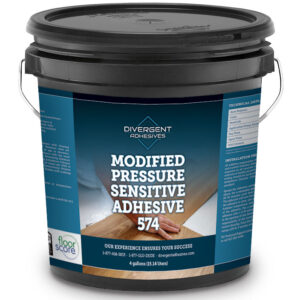
These are all issues that Sonny Callaham, technical director for Divergent Adhesives, has faced in the past. “These issues can lead to installation failures, scheduling disruptions and costly rework,” he said. “When contractors come across these extreme conditions, they need an extreme adhesive.”

Callaham said Divergent 574, a modified pressure-sensitive adhesive, checks all the boxes for what’s needed on the job site. Divergent 574 is a firm set adhesive that can be used either wet or dry and gives that tenacious bond that helps prevent jobsite damage. “With its superior peel strength, it helps prevent unwanted shifting caused by other trades,” he said.

Excess moisture in the substrate, poor surface preparation, an incompatible adhesive or improper application techniques can prevent adhesives from curing properly or achieving a strong bond, leading to callbacks and poor performance. “By testing and controlling moisture, ensuring the subfloor is clean, dry and appropriately prepared—and following manufacturer directions for adhesive type, coverage, open time and jobsite conditions—these challenges can be prevented,” said Adam Sartain, senior marketing manager for TotalWorx Accessories, a Shaw brand.
TotalWorx’s RockHold is a high tack, transitional pressure sensitive adhesive built for residential and commercial installs. “RockHold solves the installer pain point of needing multiple, environment-specific adhesives by delivering one tall tack, moisture-resistant, flexible adhesive that works across products and conditions,” Sartain said.

RockHold performs in environments with up to 99% RH and pH 12, suitable for high risk slabs. “The adhesive installs either semi-wet or dry to the touch, giving installers flexibility without sacrificing bond strength and helping retailers stock one adhesive instead of several,” he added.

Sartain said RockHold is approved for LVT/LVP, non PVC carpet tile and sheet vinyl, and works across all Shaw commercial carpet tile backings and attached pad options (EBA, cork and IXP), including Shaw Floors and COREtec.

Addressing jobsite challenges

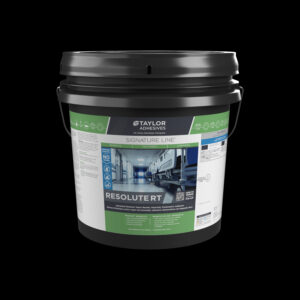
adhesiveOne issue commercial contractors face is the time required before a space can handle heavy traffic or rolling loads. To address this issue, Taylor Adhesives’ R&D department accelerated the curing process for Taylor Resolute by 25%. “Taylor Resolute RT (rapid turnover) can now handle heavy rolling loads in as little as six hours,” said Gary Scheidker, director of technical services. “This is a game changer for existing hospital projects that need the rooms ready for occupancy soon after installation.”
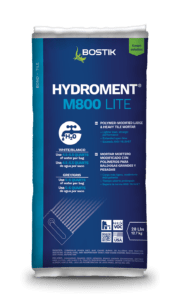
Weight issues can also impact installations. Common jobsite challenges with tile mortars, for example, include tile sag on vertical and large-format tile installations, as well as the physical strain of lifting and carrying heavy bags throughout a shift. “These issues can be addressed by selecting the right mortar for the application and choosing lightweight formulations that improve handling without sacrificing bond strength,” said Jack Kastenholz, technical development professional, Bostik Consumer & Construction.

Kastenholz cited Bostik’s new Hydroment M800 Lite as an adhesive that solves both problems; its lightweight formulation is designed to reduce the amount of weight crews lift and carry, helping cut installer fatigue and maintain productivity over long shifts. “It combines easier handling with premium performance, true non-sag capability, ANSI A118.15HET classification and extended working time,” he explained. “Contractors get stronger hold, reliable non-sag performance and more time to set and adjust larger tile, all with the high performance expected from a premium mortar and noticeably less strain on the crew.”

According to Ben Wood, director of hard surface product development for Engineered Floors, another persistent issue installers encounter on commercial job sites is elevated subfloor moisture and high pH levels that can quickly compromise the bond of standard adhesives. Additionally, Wood said unpredictable substrate porosity often forces crews to carry multiple adhesive types, increasing the risk of application errors and complicating inventory. “We address these issues by engineering versatile, highly moisture-resistant adhesive ecosystems that adapt to varying subfloor conditions without requiring costly, time-consuming mitigation steps,” Wood said.

EF’s Xcessories Pro-Tac adhesive supports the company’s Pentz Commercial and PureGrain Flex hard surface lines by providing a modified pressure-sensitive formula that can be dry-set or semi-wet set depending on substrate porosity. “When job sites present severe moisture or pH challenges, pairing Pro-Tac with our Pro-Tac Primer+ creates a robust, highly resistant barrier that protects the flooring and ensures technical warranty compliance,” Wood said. “This low-odor, low-VOC system ultimately simplifies the installation process while providing a rock-solid bond for demanding commercial environments.”

adhesiveCheaply made LVT is another pain point for installers as these lower performing products tend to move around more after install, causing some adhesives to fail. RH levels beyond what some adhesives are rated to handle can also lead to installation failures. To address that issue, Mohawk’s Performance Accessories M700 Plus provides high shear strength and RH tolerance across multiple flooring materials, which makes it a good choice for challenging installation conditions.
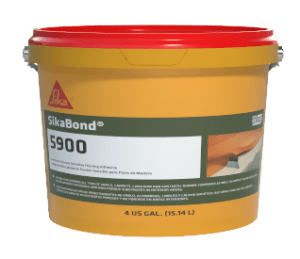
By now it’s obvious that choosing the right flooring adhesive isn’t just a minor detail, it plays a critical role in how well the floor performs and how long it lasts. “Every flooring material responds differently to moisture, temperature and environmental changes, so the adhesive must be carefully matched to both the flooring type and the subfloor,” said John Lio, marketing director for Sika Corp.

Lio cited SikaBond-5900 as a premium-grade, pressure-sensitive resilient flooring adhesive that provides a superior bond and addresses multiple concerns in a single application. “It features high-strength technology and the highest caliber initial tack, shear and peel strength, while simultaneously providing moisture resistance up to 14 lbs./99% relative humidity,” Lio said. “These performance attributes deliver peace of mind for a wide range of floor coverings on porous and non-porous subfloors.”
See the full spread in the July 13 print edition of FCNews.

The post Latest adhesive innovations solve common problems appeared first on Floor Covering News.


Latest adhesive innovations solve common problems Posted First on https://fcnews.net

Thursday, July 23, 2026

Bentley officially launches Land/Mark

Los Angeles—Bentley has launched Land/Mark, a new carpet tile collection designed in collaboration with Neutral Haus.

Bentley previewed the collection at NeoCon 2026. It is available in three styles: Where We Met, Old Haunts and Know By Heart.

Where We Met features an irregular, layered pattern inspired by a cobblestone path. Old Haunts draws from aged architectural surfaces. Know By Heart uses striated patterns and gradual color movement.

The collection includes 16 colorways. The palette features mineral grays, softened blacks and chocolate browns.

Bentley manufactures Land/Mark with Bentley Premium Nylon made from ECONYL by Aquafil. The regenerated nylon uses reclaimed materials, including fishing nets, carpet and other post-consumer waste.

Land/Mark products are PVC-free, Red List Free, PFAS-free and antimicrobial-free. Bentley manufactures the collection at its California facility, the first LEED EB-OM Gold-certified carpet mill in the U.S.

Plus, Bentley can recycle the products at the end of their useful life through its FULFILL carpet reclamation program.

The post Bentley officially launches Land/Mark appeared first on Floor Covering News.


Bentley officially launches Land/Mark Posted First on https://fcnews.net

New solutions for age-old issues

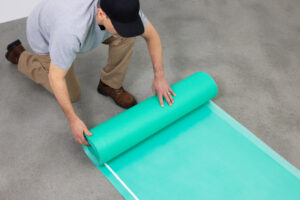
Modern underlayment and cushion solutions have evolved from simple padding into multi-functional, high-performance layers. These offerings work to resolve legacy flooring issues such as moisture damage, thermal loss and poor sound insulation by leveraging advanced materials, built-in moisture barriers and antimicrobial defenses.

Following is a snapshot of underlayment/cushion products that provide solutions to old issues:

solutionsFuture Foam

Future Foam’s leading product, My Name is Best, is engineered with 8.5-pound density memory foam and SpillSafe moisture barrier. It’s clean, pure and built to last a lifetime, with no recycled fillers.

From studio-grade soundproofing to Pet Solutions odor defense, the product is touted as the “silent guardian” of a homeowner’s investment, providing comfort and style.

solutionsLeggett & Platt

Leggett & Platt’s Make-A-Wish Strength represents a new generation of underlayment designed to enhance performance, comfort and longevity across hard surface flooring applications. Engineered from high-density synthetic rubber, Strength excels at the most critical aspect: support without losing thickness over time. Leggett’s Block-Out Moisture Guard and Fresh Dimension antimicrobial provide added protection.

solutionsMaxxon

Maxxon Isolate is an innovative solution designed for compromised concrete slabs. It helps protect finished flooring by isolating residual abatement chemicals and other embedded contaminants while providing a moisture barrier. Easy to apply with a roller, Isolate streamlines installation and helps reduce the risk of moisture- and contamination-related flooring failures, giving building owners greater confidence in long-term floor performance.

solutionsMP Global

QuietBoard solves a problem most underlayments ignore: what to do when removing thicker flooring like carpet that leaves a height gap between the subfloor and existing trim. This 6mm acoustical fiberboard raises the subfloor level efficiently—eliminating transitions and trip hazards—while simultaneously delivering the full performance stack of a premium underlayment. QuietBoard manages moisture by holding up to 5X its own weight in vapor without trapping it.

solutionsPalziv

HQ Living LayerX underlayment for hard surface flooring addresses several of today’s most common flooring installation challenges in a single underlayment. Its integrated 6-mil moisture barrier helps protect floors by preserving tongue-and-groove connections, while embossed airflow channels aid moisture management beneath the floor. The resilient foam construction adds comfort underfoot.

solutionsPerformance Accessories

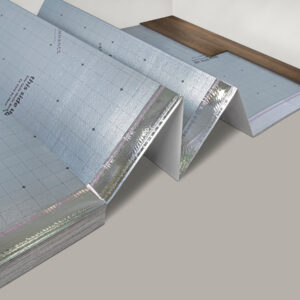
Mohawk Performance Accessories Platinum 3mm is designed as the go-to underlayment in demanding applications. The product was developed to handle subfloor smoothing while providing insulation against the cold. It also has a built-in moisture barrier, offers exceptional sound performance and the fanfold design makes installation easier than traditional roll products.

solutions

Schönox

S1500 So many projects, whether new construction or from the ground-up renovations, are a challenge to get moving in the right direction. Schönox S1500 is an indispensable solution for use on interior and exterior substrates and is ideal for installers of every skill level. This cement-based, moisture-resistant, self-leveling solution is suitable on cement and gypsum substrates and can be installed from 1 /8 inch up to 1 1 /2 inches.

solutionsTotalWorx

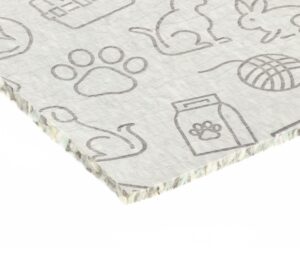
TotalWorx Accessories’ Pet Perfect Underlayment is designed with pet owners in mind, delivering comfort, durability and protection. Its built-in moisture barrier helps guard against spills and accidents, while its superior sound reduction creates a quieter home. Engineered for long-lasting performance, Pet Perfect Underlayment also provides added cushioning for a more comfortable step as well as antimicrobial protection.

The post New solutions for age-old issues appeared first on Floor Covering News.


New solutions for age-old issues Posted First on https://fcnews.net

Wednesday, July 22, 2026

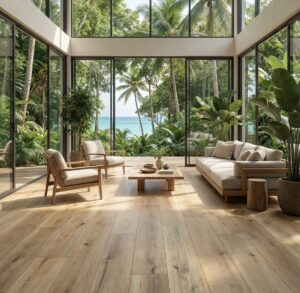
Laminate takes its cues from hardwood

If you can’t beat them, emulate them. That’s the approach that many laminate suppliers are taking when it comes to competing with the category that ironically inspires the bulk of laminate visuals today.

Thanks to advances in embossed-in-register technology, digital printing and thicker core constructions, today’s laminates have made strides in simulating not on the appearance but also the surface texture and heft of real wood. Here’s how:

laminate

High-resolution imaging

Early generations of laminate suffered from obvious repetition, where the same plank pattern would appear frequently across an installed floor. Today’s products dramatically reduce that issue through expanded “pattern banks,” where dozens or even hundreds of unique plank faces are created within a single collection. Standout examples include Mohawk’s RevWood, Mannington’s Restoration Collection, Hallmark Home Waterproof Laminate, and US Mills, to name a few. Suppliers have also become more adept at replicating custom patterns originally rendered in hardwood. These include popular herringbone patterns offered by suppliers like Inhaus and Classen.

The improvements didn’t stop there. Using advanced color technology, designers can now specify visuals that reflect everything from lightly whitewashed Scandinavian oak to heavily stained, character-rich walnut. These visuals are no longer flat or one-dimensional; instead, they include depth cues that enhance realism under both natural and artificial light.

Embossing elevated

EIR is certainly not new to laminate flooring, but the industry has certainly seen dramatic improvements in this regard. While early laminate floors often featured smooth or uniformly textured surfaces that seldom aligned with the visual grain beneath the wear layer, improvements in printing technology now seeks to deliver a more tactile experience.

Modern manufacturing techniques now allow for the surface texture to be more precisely aligned with the printed wood grain. For instance, if a knot is visible in the design layer, the surface will physically feel like a knot. If a grain line curves across a plank, the embossing follows that exact path. This synchronization significantly enhances realism and is one of the primary reasons laminate can now be mistaken for engineered hardwood at a glance. Some premium laminate lines even replicate the subtle “handscraped” or “wirebrushed” finishes seen in artisan hardwood flooring. These textures add another layer of depth and imperfection, which is essential for achieving a truly natural aesthetic.

Low-gloss still sparkles

Another key factor in laminate’s replication of hardwood is the shift away from high-gloss finishes. Early laminate floors often had a shiny, plastic-like surface that immediately distinguished them from real wood. Today’s products typically feature ultra-matte or low-sheen finishes that better replicate the natural oil or satin finishes found in site-finished hardwood floors.

Early iterations of aluminum-oxide coatings—the material that helps protect laminate flooring against scratches, stains and wear—often provided a cloudy, less-than-desirable appearance. But thanks to advanced aluminum oxide coatings, consumers can still enjoy the durability these coatings provide without compromising overall visual appeal. Furthermore, more manufacturers are incorporating anti-glare technologies that ensure the floor does not reflect excessive light, further enhancing realism in brightly lit environments.

All about the bevels

Laminate suppliers didn’t stop at improved digital printing or surface texturing. Dimensional realism is also achieved through improvements in edge detailing, specifically bevels. Micro-beveled and painted bevels along plank edges help define individual boards, mimicking the slight gaps and shadows that naturally occur between hardwood planks.

According to suppliers, these bevels serve two purposes. Visually, they break up the floor into distinct planks rather than a continuous sheet, reinforcing the impression of real wood boards. And from a functionality standpoint, they help conceal minor installation irregularities and reduce the appearance of wear along edges over time.

Heft sells

Beyond surface visuals, laminate flooring has also advanced in terms of physical construction. Thickness plays a key role in how closely laminate can replicate the feel and performance of hardwood underfoot. Traditional laminate flooring typically ranged from 6mm to 8mm in thickness, which often resulted in a hollow or less substantial feel underfoot. However, many mid-to-high-end laminate products range from 8mm to 12mm, with some premium offerings extending to 14mm or more. (Case in point are products from HF Design and BHW Floors.) This increased thickness contributes to a more solid, stable walking surface that better approximates the density and resilience of engineered hardwood.

Thicker laminate also improves sound absorption, reducing the hollow “click” sound once associated with earlier products. Combined with modern underlayment systems—often made from foam, cork or rubber composites—laminate now delivers a quieter, more cushioned acoustic experience that closely resembles wood installed over a subfloor.

Another factor contributing to the overall heft of laminate floors is the incorporation of more substantial core material. In fact, some of the laminate floors on the market today feature innovative core materials that fall outside of the traditional HDF/MDF realm, wading into rigid core or hybrid materials.

All these advancements not only improve the product’s overall visual design and performance, but they also aim to provide increased profit opportunities for retailers and distributors while helping maintain overall market share in a highly competitive hard surface segment.

The post Laminate takes its cues from hardwood appeared first on Floor Covering News.


Laminate takes its cues from hardwood Posted First on https://fcnews.net

Tuesday, July 21, 2026

Builder confidence declines in July amid affordability challenges

JulyWashington, D.C.—Builder confidence in the market for newly built single-family homes declined in July as affordability challenges and economic uncertainty continued to weigh on the housing market, according to the National Association of Home Builders (NAHB).
The National Association of Home Builders/Wells Fargo Housing Market Index fell two points to 34 in July, down from a revised reading of 36 in June. Builder sentiment has remained below 40 for 15 consecutive months, the longest stretch since 2012.

“Many potential buyers remain on the sidelines as they wait for lower mortgage rates, more certainty on inflation and a clearer economic outlook,” said Bill Owens, chairman of the NAHB and a home builder and remodeler from Worthington, Ohio. “The recently enacted 21st Century ROAD to Housing Act contains important provisions on land-use and zoning, regulatory reform and financing tools that address obstacles facing builders and buyers, but these reforms will take time to implement.”

Robert Dietz, NAHB chief economist added, “With the HMI below 40 for 15 straight months, affordability remains the home building industry’s primary challenge, as elevated mortgage rates, costly land, rising material prices and persistent skilled labor shortages continue to affect the market. Looking ahead, the newly enacted housing law is a positive step that will help expand housing supply and lower overall housing costs, although more policy change is needed at the state and local level.”

The survey also found that 37% of builders reduced home prices in July, up from 35% in June and 32% in May. The average price reduction remained 6%.

The use of sales incentives increased to 63% in July from 62% in June. It marked the 16th consecutive month that at least 60% of builders reported using incentives.

HMI components decline

All three Housing Market Index components declined in July.

The index measuring current sales conditions fell one point to 37. The gauge tracking expected sales over the next six months dropped two points to 43. The index measuring prospective buyer traffic declined two points to 23.

Looking at three-month moving averages, the Northeast increased one point to 45 and the Midwest rose two points to 45. The South declined one point to 33 while the West fell one point to 26.

The post Builder confidence declines in July amid affordability challenges appeared first on Floor Covering News.


Builder confidence declines in July amid affordability challenges Posted First on https://fcnews.net

Tuesday Tips: Scheduling with purpose

Dalton—The World Floor Covering Association (WFCA) released a new “Tuesday Tips” this week. In the series, WFCA experts present short video tips for improving customer service and optimizing staff performance. In the end, it’s all about understanding the importance of doing 100 things just 1% better than your competition.

In this week’s Tuesday Tips, Tom Jennings, retail training expert, details the value of professional scheduling and how it can improve organization, efficiency and customer service.

The post Tuesday Tips: Scheduling with purpose appeared first on Floor Covering News.


Tuesday Tips: Scheduling with purpose Posted First on https://fcnews.net

Ceramic: Health and wellness moved to the forefront

Daltile’s Emserson Wood taps today’s health and wellness focus.

Ceramic and porcelain tile bring to the table an unprecedented number of benefits that speak to the needs of today’s consumer. These attributes are both inherent to the product itself and its development. Production location, too—considering the industry’s battle with tariffs and inflationary pressures—hits home for today’s end user.

To name a few, we’re talking about: Eco-conscious development and production. U.S. manufacturing. Ultimate waterproofing. These are not small things. These are top of mind for many consumers today—retail owners, too. Since the onset of the pandemic in 2020, one inherent benefit of tile has risen to the top of the heap: its healthy home and wellness benefits.

Consumers focused on Health and wellness abound, so much so that the topic has evolved from a strategic marketing advantage for the supplier to a true driver of choice for the consumer. “Wellness has evolved beyond a trend—it’s now a fundamental driver of residential design,” said Carly Ghodsian, director of curator collections, Emser Tile.

Paulo Pereira, vice president of MSI, agreed, noting that consumers increasingly view their homes as places that should support comfort, health and wellness and everyday functionality. “As a result, purchasing decisions are often influenced by how materials contribute to cleanliness, durability and long-term satisfaction,” he added. “Wellness is influencing not only what consumers buy, but how they evaluate value. Homeowners are looking for products that contribute to cleaner spaces, require less maintenance and perform over time.”

Bottom line: Tile speaks to each of these needs. However, suppliers agree, marketing needs to up its game. “I think we’ve been underselling tile for years,” said Veronica Gripp, brand manager, Portobello America. “The health story is baked into the material itself; we just haven’t told it loudly enough. People deserve to know what they’re bringing into their homes and what it does over time.”

Selling a wellness material

So what does it mean to bring tile into your home—and what will become of it over time? Turns out the benefits are vast, and consumers should be made aware during the purchasing process. If nothing else, it’s imperative to understand that tile’s lofty price tag comes with lofty benefits that support the consumer’s most pressing needs.

First and foremost, point to the product itself—the physics, in this case, matter. “Tile is inorganic, non-porous and dimensionally stable,” said Jim Neel, technical manager, Portobello America. “It doesn’t absorb moisture, it doesn’t support microbial growth and it doesn’t off-gas. Those aren’t marketing claims. They’re the physics of a fired ceramic body.”

But that’s not all. Once the tile is fired, the benefits to indoor health and wellness continue. “Unlike other flooring options, porcelain tile does not trap dust, pollen, pet dander or other indoor pollutants, contributing to cleaner indoor environments,” explained Rodolfo Panisi, Florim USA president and CEO.

health and wellness
Emser’s Luminix

Cleanability is a high selling point in today’s market. It’s also a feature that not many flooring categories can truly tout like tile. “Tile is an ideal material for maintaining a sterile environment and is a good choice for health- or hygiene-conscious individuals,” said John Williams, manager technical services at Emser Tile. “Tile is very easy to keep clean. It doesn’t retain bacteria. It doesn’t retain anything that would become an environmental hazard or a health hazard. So, from a hygienic point of view, it is an optimum choice.”

Longevity, too, is one of tile’s superpowers. “Its durability and long lifespan reduce the need for frequent replacement, minimizing disruption and material waste over time,” Panisi explained.

The commercial side of the business has evolved in such a way as to support these conversations. What’s more, wellness-focused organizations have made it increasingly more advantageous for suppliers to not only tout these benefits but increase their wellness-focused innovation.

“The frameworks have changed the conversation completely: WELL, Living Building Challenge, LEED,” Gripp said. “Specifiers aren’t just asking ‘is this durable?’ anymore. They’re asking ‘what is this made of? And what does it do to the people inside the building?’ That shift has opened real doors.”

Portobello’s Neel agreed, adding, “Tile holds up in those frameworks because it performs on the criteria that matter. Thermal mass, acoustic potential, no chemical maintenance requirements. FloorScore certification addresses indoor air quality directly. The product earns its place; it’s not a workaround. And that credibility matters when there is a project team pursuing certification. Designers don’t have to make trade-offs between aesthetics and wellness. That’s not always a given.”

Design is a bridge that crosses both markets. Suppliers agree the importance of design in creating wellness-focused spaces can’t be exaggerated—and it’s an area in which tile excels beyond most flooring categories. “From a design perspective, people increasingly recognize that well-being is influenced by the spaces they occupy,” Pereira said. “Natural colors, organic textures and biophilic design elements can help create environments that feel calming and restorative. Ceramic and porcelain tile excel in this area because they can authentically capture the look of natural materials while offering exceptional performance.”

Terri Marion, product manager-Crossville, AHF Products, added, “Tile contributes to psychological comfort through natural aesthetics, tactile surfaces and materials that create immersive spaces people genuinely enjoy spending time in. Wellness isn’t simply about eliminating harmful materials anymore. It’s increasingly about creating environments that feel calm, restorative and connected to nature.”

Innovation in tile

health and wellness
MSI’s Murcia

As one of the most technologically advanced flooring materials, it tracks that innovation continues to ramp up in the category. That is true across all end goals for tile (sustainability, durability, design, etc.), including that of healthy living and overall wellness.

“The future of tile innovation will likely continue moving toward products that make healthy design easier to achieve across the entire home,” Pereira noted.

Sean Cilona, vice president of product and marketing, Virginia Tile, agreed, noting, “At the end of the day, healthy living isn’t just about what’s inside a product it’s about choosing materials that support better indoor air quality, require fewer harsh cleaning products and perform for decades. Ceramic and porcelain tile have always delivered on those fundamentals, and I expect manufacturers will continue to build on those strengths as wellness becomes an even bigger driver in product development.”

What do some of those innovations look like? Here are some examples:

  • Maintaining certifications that support environmental and health standards.

“We actively collaborate with industry partners, regulatory bodies and certification organizations to stay informed about the latest advancements in sustainable practices,” said Dave Godlewski, vice president of sales and marketing, independent channel, Wonder Porcelain. “We’re achieving relevant certifications, such as Green Squared G2 certification, which demonstrates our commitment to recognized environmental standards. We also conduct comprehensive Life Cycle Assessments to quantify the embodied carbon footprint of our ceramic tiles. This includes analyzing raw material extraction, manufacturing processes, transportation and end-of-life considerations.”

“Greater transparency through EPDs, HPDs and Declare Red List Free labels give architects, designers and builders clearer insight into material composition and environmental impact, supporting healthier building certifications like WELL and LEED,” Florim USA’s Panisi said.

“The significant shift is material transparency,” Portobello America’s Neel said. “HPDs let specifiers verify exactly what’s in the product and whether any inputs appear on chemical concern lists like the LBC Red List. Five years ago that was rare. Now it’s an expectation.”

  • Advanced surface technologies 

Daltile’s Defend with Microban eliminates 99% of bacteria on the tile surface. “Daltile has taken the already hypo-allergenic and easily cleaned properties of tile flooring even a step further by introducing the Defend program and the new floor, wall, and mosaic tile products under that umbrella,” said Patrick Warren, vice president dealer sales and showrooms, Dal-Tile. “Microban technology is world-leading antimicrobial product protection that has revolutionized product cleanliness. Because Microban technology is built into the tile, it will not wash off or wear away, resulting in a surface that is consistently protected from the growth of bacteria, 24 hours a day, 7 days a week.”

“Manufacturers are advancing tile through more precise surface engineering that improves both performance and user experience,” Crossville’s Marion said. “Today’s innovations aren’t just about technical performance—they’re about how a surface feels and functions in everyday life. Innovations include textures that enhance traction while maintaining comfort and cleanability, as well as finishes that create a softer tactile experience without compromising flooring performance.”

  • Cleanability

“Large-format tiles and porcelain panels reduce grout lines, minimizing areas where dirt and bacteria can accumulate and making cleaning more efficient and less reliant on harsh chemicals, for better hygiene,” Florim USA’s Panisi said.

“We are seeing growing interest in larger-format tiles, integrated floor-and-wall solutions, and collections that help create seamless environments,” MSI’s Pereira said. “Products with large-format sizes available allow designers to reduce visual clutter with less grout lines that create an easier cleaning experience that contribute to a greater sense of hygiene and wellbeing.”

  • Design innovation

“Innovation is also focused on creating more realistic surfaces that deliver the emotional appeal of natural materials with the practical advantages of porcelain tile,” MSI’s Pereira said. “This kind of innovation helps homeowners and designers achieve wellness-oriented spaces that feel natural calming, and elevated while remaining easy to maintain.”

The post Ceramic: Health and wellness moved to the forefront appeared first on Floor Covering News.


Ceramic: Health and wellness moved to the forefront Posted First on https://fcnews.net