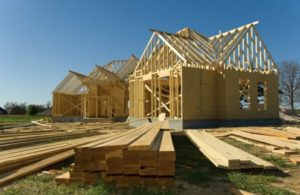
 Washington, D.C.—Single-family home construction declined across all geographic regions in the first quarter of 2026, according to the National Association of Home Builders (NAHB). NAHB cited economic uncertainty, high material costs and elevated interest rates as key pressures.
Multifamily construction grew in most areas, according to the latest NAHB Home Building Geography Index.
“Markets continue to shift single-family construction activity away from high-density population centers toward more affordable rural areas,” said Bill Owens, chairman of the National Association of Home Builders and a home builder and remodeler from Worthington, Ohio.
NAHB chief economist Robert Dietz said higher material and financing costs continue to weigh on single-family production. “Higher material and financing costs are acting as major headwinds to single-family production,” he said. “And while builders continue to offer price cuts and incentives, ongoing affordability challenges are keeping many potential buyers on the sidelines.”
Dietz said multifamily markets have remained broadly resilient. However, he said those same pressures could soon affect the multifamily market.
Single-family permits slowed
Nationwide single-family permits slowed in the first quarter. Large metro core counties saw the sharpest declines. These areas have the highest population densities.
Core counties within large metro areas contracted 16% year over year on a four-quarter moving average basis. Compared with the previous quarter, the market declined another 3.2 percentage points.
More broadly, single-family construction in non-rural areas fell 9.2%. That category includes counties in small and large metros.
Large metro core counties have lost an average of 0.1 percentage points in market share each quarter for the past decade. The pace of decline accelerated after the pandemic.
This geography accounted for 14.7% of single-family permits in the first quarter. That was down 1.3 percentage points from a year earlier and 4.1 percentage points from a decade ago.
Large metro suburban counties followed a similar trend. Their market share fell 3.3 percentage points over the past decade.
By contrast, other geographies saw more even gains. Outlying counties in small metros recorded the largest gain from a decade ago, rising 1.9 percentage points. They also gained 0.7 percentage points from the first quarter of 2025.
The first-quarter HBGI showed these single-family market shares:
- 14.7% in large metro core counties
- 24.3% in large metro suburban counties
- 9.3% in large metro outlying counties
- 29.4% in small metro core counties
- 10.8% in small metro outlying areas
- 7% in micro counties
- 4.5% in non-metro/micro counties
Multifamily construction grew
Multifamily construction expanded across most markets in the first quarter. The exceptions were outlying counties in large metros and micro counties.
NAHB said those two geographies appear to be normalizing after consistent growth throughout 2025.
Large metro core counties posted the strongest multifamily gain in the first quarter at 20.8%. Activity accelerated after returning to positive growth in the fourth quarter of 2025.
Multifamily construction in non-rural counties also grew 10.5%. Growth in rural counties slowed from 11.4% in the previous quarter to 1.8% in the first quarter.
The first-quarter HBGI showed these multifamily market shares:
- 36.5% in large metro core counties
- 26.9% in large metro suburban counties
- 3.1% in large metro outlying counties
- 23.8% in small metro core counties
- 5.1% in small metro outlying areas
- 3.4% in micro counties
- 1.2% in non-metro/micro counties
The post Economic uncertainty slowed single-family construction appeared first on Floor Covering News.
Economic uncertainty slowed single-family construction Posted First on https://fcnews.net

No comments:
Post a Comment