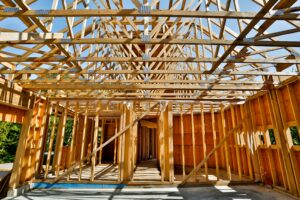
The housing market faced persistent headwinds throughout 2025 as elevated mortgage rates, inflationary pressures and economic uncertainty constrained supply and demand. The builder community and supporting industries such as flooring all felt the ripple effects of these challenges.
“2025 was a soft year for the single-family builder market overall,” said Travis Cramer, vice president, sales and product manager, Tarkett Home. “Higher mortgage rates and other market conditions that affected affordability, especially for younger buyers, have caused single-family starts to remain below the peaks we saw following the pandemic.”
Housing starts data underscored the slowdown. In August—the most recent period available due to the extended government shutdown—the single-family housing starts seasonally adjusted annual rate of 890,000 fell 7% over the previous month, according to the U.S. Department of Housing and Urban Development and the U.S. Census Bureau.
By comparison, the remodeling sector remained more resilient, with spending expected to continue growing due to aging housing stock and gains in household net worth.
“Single-family construction underperformed in 2025 as recession fears and economic uncertainty kept would-be buyers on the sidelines,” Sarah Martin, associate director of forecasting at Dodge Construction Network. “While softer demand has slightly eased prices and mortgage rates, affordability remains near historic lows.”
The Federal Reserve resumed rate cutting in September to manage risks from weakening labor market conditions, yet affordability challenges persisted. “The shutdown canceled October job and inflation reports, with November data not available until after the December FOMC meeting, complicating policy decisions heading into 2026,” noted Robert Dietz, SVP and chief economist at the National Association of Home Builders (NAHB).
Despite these challenges, the overall economy remains resilient. Homebuyers and homeowners received a bit of good news over the Thanksgiving holiday as mortgage rates were a half percent lower than the same period last year, creating a more favorable environment. Mortgage rates averaged 6.19% for a 30-year fixed-rate mortgage and 5.44% for a 15-year fixed-rate mortgage, according to Freddie Mac.
“Mortgage rates are expected to ease slightly but remain high, which limits affordability and financing options across both housing markets,” said Scott Baker, vice president of single family, Shaw Industries. Lending rates remain well above the historical average of 4% recorded between 2013 and 2019.
Persistent challenges
Indeed, housing affordability remains a defining builder market issue. A recent consumer survey from REMAX, a real estate franchisor, revealed nearly 80% of respondents said more affordable home prices would prompt them to buy within the next few months.
“Single-family builders worked very aggressively to overcome the significant concern of affordability,” said Dan Butterfield, vice president of sales, new residential, Dal-Tile. “Mortgage rates buy-downs were a creative way for them to address such, yet today this gesture has become an expectation with first-time buyers.”
Last year, builders grappled with more than just affordability concerns. Labor shortages, high building material prices and lot availability continued to weigh heavily on the industry.
“Price volatility will continue, which really puts pressure on builder schedules and margins,” said Jennifer Zimmerman, chief financial officer, AHF Products. “Labor pricing has gone up due to labor shortages. Tariffs are putting pressure on raw materials (pricing) and inputs required for homebuilding.”
Meanwhile, tariff policies exacerbated the situation, particularly in the lumber market, observers said. For example, tariff rates on Canadian lumber increased from 14.5% to 45% in 2025, according to NAHB. “Given that 85% of U.S. lumber imports come from Canada, these tariffs will significantly increase construction and renovation costs,” Fan-Yu Kuo, NAHB’s senior economist, explained.
Labor shortages further compound the problem. Builders reported difficulty finding qualified tradespeople such as framers, electricians and plumbers. Labor shortages, an industry bugaboo, are expected to continue in 2026, which can lead to project delays and higher costs.
“Slower immigration into the U.S. will have an impact on both the supply and demand sides of the housing market,” Dodge’s Martin noted. “With an estimated 30% to 40% of the construction workforce being foreign-born, slower immigration will exacerbate existing labor shortages and slow the market’s ability to build enough homes.”
To that end, builders have been making adjustments to address the affordability issue. “They are heavily investing in incentives, such as mortgage rate buy-downs and upgrade allowances, to fight the housing affordability issue,” said Matt Mitchell, vice president – builder and multifamily, Mohawk.
Likewise, flooring providers are adapting to these pressures utilizing different tools and strategies. “At the selection phase, things like online visualization tools and fast sample orders are key,” Tarkett’s Cramer said. “At installation, solutions that are quick and easy to install and reduce the need for moisture testing, for example, help combat the challenge of skilled labor shortages.”
With tariffs and global supply delays straining construction timelines, some experts foresee a change in how materials are sourced. “I think we’re going to see builders move more toward a domestic manufacturing footprint,” AHF’s Zimmerman stated. “It reduces lead time and price volatility.”
The road ahead
The builder market outlook is cautiously optimistic, industry members say, as demand for homeownership remains strong. According to the REMAX survey, 88% of buyers plan to purchase a home in 2026 despite 71% stating market conditions having delayed their plans. More than half of respondents to the REMAX survey indicated lower interest rates would expedite their purchase plans, although fewer than 10% said rates between 5% and 6% would be sufficient.
“Going into 2026, affordability and financing will be big constraints that impact overall demand,” AHF’s Zimmerman noted. “Mortgage rates have gone down a little bit, but people are still tight on budgets.”
Buyers are also prioritizing lifestyle factors. Neighborhood safety, social connection and access to amenities such as pools and gyms are becoming increasingly important, the REMAX survey reports. Sixty percent of respondents said they would pay a premium for shared community amenities, while 51% expressed a preference for suburban locations.
“Today’s buyers aren’t just looking for a house—they’re looking for a sense of community,” Chris Lim, REMAX chief growth officer, stated in a release. “It’s clear that lifestyle and connection are just as important as the property itself.”
Builders are responding to these preferences by designing homes with diverse living spaces to accommodate multi-generational households and by emphasizing community-oriented developments. “A smaller footprint means less tile per home per unit,” Dal-Tile’s Butterfield pointed out. “However, in the same plot of land, we’d likely see more homes per units built to offset.”
Some executives are also seeing smaller homes being built. “One-hundred percent,” Mohawk’s Mitchell said, “especially at the entry level for first-time homebuyers. Smaller homes and smaller lots are being used to combat affordability concerns. There are a lot of vacant, developed lots. The demand and land are there; it’s just a matter of people getting comfortable spending their money and whether they receive a fair mortgage interest rate.”
At the same time, observers say builders are trying to tighten down the build cycle from the start to finish of homes. “Build cycles were 120 days and now they’re trying to get that down to 100 days,” Mitchell added. “Service is becoming very important to all of them.”
At the same time, geography will continue to play a major role in home values. NAHB analysis of data from the American Housing Survey, sponsored by HUD and conducted by the Census Bureau, revealed that homes in large metropolitan areas command premiums of about 60% compared to similar residences in non-metro regions. Even smaller or mid-sized metro areas offer a healthy boost, with home values averaging 22% higher.
For the flooring industry, 2026 will bring both challenges and opportunities. As new home starts recover modestly, flooring demand is expected to rise. Affordability pressures and tariff-driven material costs will remain obstacles.
“By staying agile and responsive to these challenges,” Tarkett’s Cramer noted, “the flooring industry can continue to thrive and meet the needs of home buyers in an ever-changing market.”
Mohawk’s Mitchell agreed. “We’ve talked to builders we work with and others we are friendly with, and they are optimistic about 2026.”
That’s in line with the outlook from NAHB executives. “With stimulative fiscal policy and accommodative monetary policy supporting business investment and consumer spending—combined with greater clarity on trade policy—the economy is expected to continue expanding in 2026,” Dietz said.
The post Builder SOI: Observers banking on improved conditions appeared first on Floor Covering News.
Builder SOI: Observers banking on improved conditions Posted First on https://fcnews.net

No comments:
Post a Comment